Gig Garage
A gig platform for the artists, musicians, designers, and makers the big freelancing sites flatten into job categories - and for the people who'd rather hire a creative than a contractor. Solo design and build.

Why it exists
Independent musicians, illustrators, designers and muralists still find work the way they did fifteen years ago: Instagram DMs, Discord servers, friends-of-friends. SoundBetter serves a narrow, transactional slice; Fiverr grinds craft into commodified gig units. The hiring side is stuck in the same DM loop. Gig Garage is the platform for the people the big freelancing sites are too corporate to hold.
Key decisions
Designing how the music feels
The rugged visual language is a filter: the people who feel at home here are the people it's for.
Most platforms in this space look like LinkedIn with a guitar. Clean, neutral, professional - and immediately wrong for the work. Up-and-coming creatives have something to prove. They're hungry, they're trying things, they want to stand out. A clinical UI tells them this isn't their place before they read a single word.
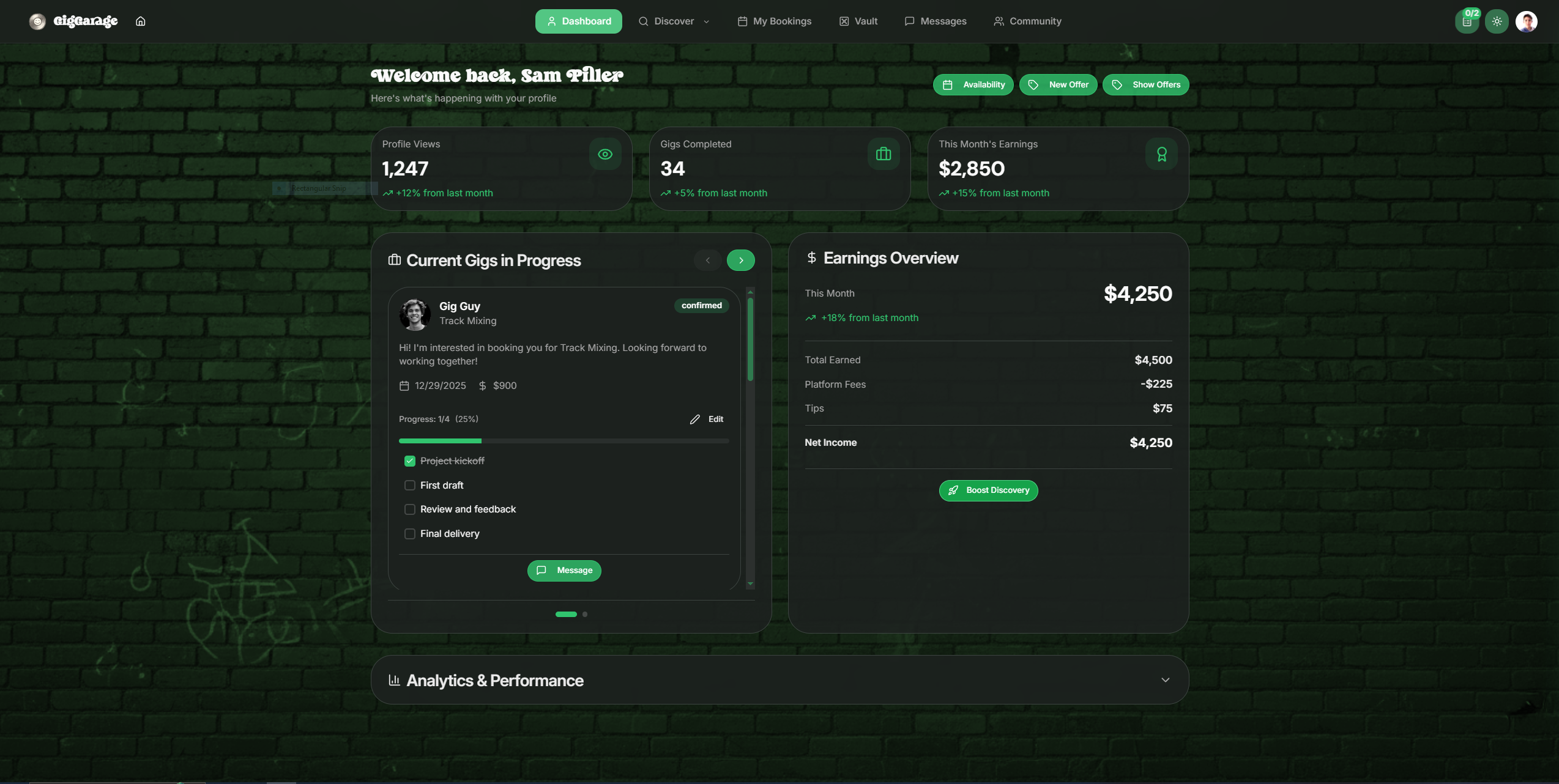
Gig Garage's visual language is rugged: black brick walls, graffiti, neon signage, the feel of an alley in the outskirts of the city. The kind of place flyers get stapled to and gigs get booked over a beer. There's no specific design lineage I pulled from - I'm a musician, and the design looks the way music makes me feel.
The aesthetic isn't decoration. It's a filter. The people who feel at home here are the people the platform is for.
Profiles as identity, not credentials
Profiles read like a personal site, not a CV, so the matching that follows is more honest.
A CV is a piece of corporate machinery. It compresses a person into bullet points so a hiring manager can scan ten of them in five minutes. That's the wrong shape for creative work - and the wrong shape for how creatives want to be seen.
Gig Garage profiles don't ask for resumes or cover letters. They ask for a portfolio, the skills you have, the skills you're curious about, the stuff you like, the stuff you don't. A profile is built more like a personal site than a job application - visiting one is closer to walking into someone's studio than reading their LinkedIn.
The decision compounds. When the artifact users build is an honest representation of who they are, the matching that follows - the gigs they pursue, the people who reach out - has a much higher chance of actually fitting.
From marketplace to community
Conversations with creatives showed fans, clients and collaborators are the same people, so the marketplace sits on a community.
The earliest version of Gig Garage was a straight marketplace. Post a gig, browse profiles, hire, transact, repeat. That's the obvious shape, and it's the shape every existing platform has converged on.
Conversations with other creatives - musicians, animators, illustrators - pushed me off it. The pattern in what they said was the same: the people who hire them, the people they collaborate with, and the people who follow their work aren't separate audiences. They overlap. A musician's biggest fan is sometimes their next paying gig. A designer's collaborator from last year is who they recommend to a friend this year.
The platform changed shape. Gig Garage is built around following, posting, and reacting to creative work alongside the gig mechanics - so the people who already care about you are part of how you find work. It's a marketplace, but the substrate underneath it is a community.
Where it landed
Gig Garage runs as a working app on mock data, with the full creative-side and hiring-side flows clickable end to end. A waitlist landing page hit 300+ signups during a brief marketing window - concrete signal that the underlying problem is felt, not just imagined.
The project is on hold while I take on paying client work, but design exploration on it is ongoing. Every freelancing project I take is also a chance to bring something new back to it.
This is also where my design voice formed. In My Town is where I proved I can ship a complex product end to end; Gig Garage is where I figured out what I actually want my products to feel like. Both have to be true to do the work I want to do.